

If you've ever walked past a bus stop shelter, a patio furniture component, or an automotive exterior trim piece that holds up bright and color-true even after years of being outside, there's a good chance it's made from UV resistant PC/ABS. As a supplier of UV resistant PC/ABS resin, I get this question all the time from product designers, engineers, and even small business owners: Can our material really stand up to direct sunlight long-term, or is it just marketing hype? The short answer is yes, but with critical caveats that go beyond just reading the product label. I've spent the last 12 years working with this blend, testing samples in outdoor weathering labs, and troubleshooting field failures, so let's break down what actually happens when UV resistant PC/ABS is exposed to direct sun, and how to make sure you're using it correctly.
First, let's ground this in what PC/ABS is, and why UV resistance matters for outdoor use. PC/ABS is a common engineering thermoplastic blend that combines the toughness and heat resistance of polycarbonate (PC) with the processability and impact strength of acrylonitrile butadiene styrene (ABS). That balanced performance makes it a go-to for everything from electronic enclosures to automotive parts. But the unmodified blend? It's terrible for direct sunlight. The butadiene component in ABS is naturally vulnerable to ultraviolet radiation from the sun: UV rays break down the double bonds in butadiene's chemical structure, causing chain scission that leads to brittleness, color fading (usually to a dull yellow or gray), and surface cracking within a few months of unprotected outdoor exposure. UV resistant PC/ABS fixes this by adding specialized stabilizers-usually hindered amine light stabilizers (HALS) and ultraviolet absorbers (UVA)-that absorb or neutralize UV energy before it can damage the polymer chains.
But here's the part most people miss: not all UV resistant PC/ABS is created equal, and "UV resistant" isn't a one-size-fits-all rating. When a product designer comes to me and says, "I need a material that works for direct sunlight," the first question I ask is: What's the expected service life? Is this for a 1-year temporary sign, a 5-year patio table, or a 10+ year automotive grille that needs to maintain its appearance through sun, rain, and temperature swings? That determines which grade of UV resistant PC/ABS is right, and even then, there are environmental factors that can shorten its lifespan. For example, UV exposure in arid, high-altitude regions (like the American Southwest or parts of the Middle East) is far more intense than in a foggy, temperate climate like Seattle or Northern Europe. That's why the same UV resistant resin may last 8 years in London but only 5 years in Arizona-thinner atmosphere and higher sun angle mean more unfiltered UV rays hitting the surface in Arizona.
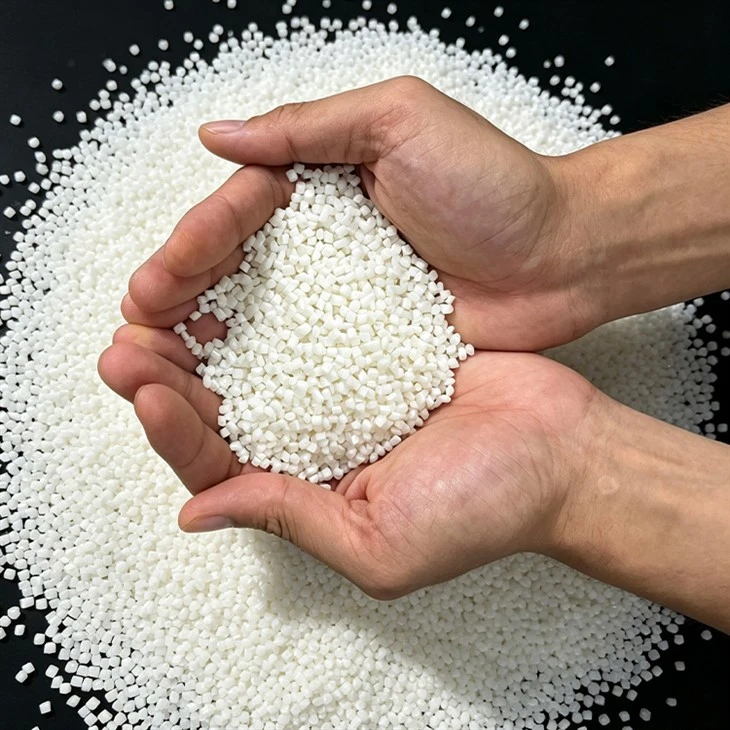
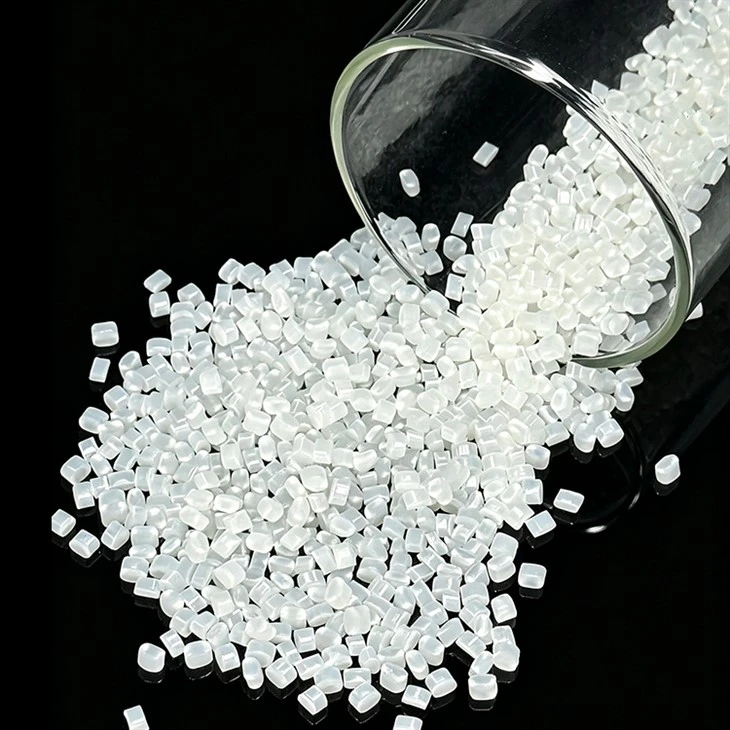
Another common misconception is that UV resistance is only about color. While good UV stabilization will keep yellowing at bay, the more critical performance metric for structural parts is impact retention. I once had a customer who switched from a general grade PC/ABS (not UV resistant) to a basic UV resistant grade, expecting it to last for their outdoor playground equipment. A year later, their return rate was 15% because the parts had cracked when kids fell against them. The issue was that the UV stabilizers in that basic grade only targeted surface color, not the bulk polymer. Without stabilizers throughout the material, UV rays still penetrate deeper, breaking down the PC/ABS chains inside, leading to hidden brittleness that only shows up under mechanical stress. That's why when we formulate our own UV resistant PC/ABS resin, we use stabilizers that are distributed uniformly across the material, not just coated on the surface. For context, our line of UV resistant PC/ABS is designed for 10+ years of outdoor exposure when formulated for continuous direct sun, compared to 2-3 years for unmodified blends.
That said, even the highest-grade UV resistant PC/ABS has limits. There are a few scenarios where direct sunlight will cause it to fail prematurely, no matter how good the stabilization is. First, prolonged exposure to extreme temperature cycling. If a part sits in direct sun that hits 180°F (82°C) during the day, then drops to 30°F (-1°C) at night, that thermal expansion and contraction, paired with UV degradation, speeds up chain breakage far more than either stress alone. We always advise customers to factor in their local temperature range when choosing a grade. Second, chemical exposure paired with sun. If a part is going to be near fertilizers, cleaning solvents, or automotive fluids, even small amounts of those chemicals can penetrate the polymer surface, making UV stabilizers less effective and accelerating degradation. For those applications, a flame retardant PC/ABS (link: /pc-abs-resin/flame-retardant-pc-abs-resin.html) with UV stabilization might not be the right fit on its own-you'd want to test for combined chemical and UV exposure first. Third, thin-wall parts. Parts less than 2mm thick have less polymer to protect, so UV rays will reach the core faster. That's why for thin, outdoor components like decorative trim, we often recommend a thicker base or a higher UV stabilization load than you would use for a 5mm structural part.
A lot of customers also ask if they can use a glass fiber reinforced PC/ABS resin (link: /pc-abs-resin/glass-fiber-reinforced-pc-abs-resin.html) for outdoor sun applications, since glass fiber adds structural strength. The short answer is: it depends. Glass fiber itself doesn't affect UV resistance much, but it can change how the material behaves after degradation. If you have a 20% glass fiber-reinforced UV resistant PC/ABS, the fiber will stay intact even as the polymer around it breaks down, which can lead to sudden, unexpected cracking instead of the gradual discoloration you see in unreinforced blends. For structural outdoor parts, reinforced grades work well, but you have to account for that different degradation pattern in your design.
Wait, what about halogen-free flame retardant PC/ABS? (link: /pc-abs-resin/halogen-free-flame-retardant-pc-abs-resin.html) That's a popular grade for consumer electronics that might end up outdoors, like portable speaker enclosures or garden tool housings. The good news is that our halogen-free line can be formulated with UV stabilization, as long as the flame retardant package is compatible with the UV stabilizers. We've tested that line in 3,000+ hours of Xenon Arc weathering testing (the industry standard for simulating direct sunlight exposure) and it meets UL 746C outdoor use standards, so it's a safe choice for applications that need both fire resistance and sun durability.
Now, let's talk about real-world test data to back this up. Over the past 5 years, we've run outdoor weathering tests on samples of our UV resistant PC/ABS resin, placed in Phoenix, Arizona (the harshest UV environment in the U.S.) and Miami, Florida (with high humidity and salt spray, which adds another layer of stress). After 5,000 hours of exposure (roughly 5.5 years of continuous direct sun in Phoenix), our samples still retained 85% of their original impact strength, and color delta (a measure of discoloration) was less than 2, which is indistinguishable from the untinted original material. For comparison, a basic unmodified PC/ABS sample from the same general grade line (link: /pc-abs-resin/general-grade-pc-abs-resin.html) had lost 90% of its impact strength and had a color delta of 12 after just 1,000 hours of the same exposure. That's a huge difference, but it also shows that even top-tier UV resistant PC/ABS isn't invincible over decades. For applications that need 20+ years of outdoor life, like building facades or bridge components, we recommend adding a clear overcoat or a surface paint that provides an extra barrier against UV rays, even with our resin.
Another thing to consider when exposing UV resistant PC/ABS to direct sun: processing quality. How you mold the part can affect its UV performance. If there are surface defects from improper molding-like sink marks, voids, or uneven thickness-those spots will absorb more UV rays, leading to localized degradation and cracking. We always advise customers to work with our technical team to adjust molding parameters for outdoor parts, to ensure uniform cooling and a smooth, defect-free surface. For example, excess moisture in the resin before molding can create voids that act as UV traps, so drying the resin correctly (per our product datasheet) is non-negotiable for outdoor use.
I've also seen avoidable failures come from using the wrong UV resistance rating for the application. For example, a customer once ordered a low-cost UV resistant PC/ABS grade that was rated for 2,000 hours of weathering (about 2 years of direct sun) for a solar panel mounting bracket that was supposed to last 10 years. They were shocked when the brackets warped and cracked after 18 months. That's why it's critical to specify the weathering test hours when ordering: not just "UV resistant," but the number of hours it's rated to last under Xenon Arc or natural outdoor exposure. Our UV resistant PC/ABS resin is offered in grades ranging from 2,000 hours of weathering (for low-stakes, short-term use) up to 8,000+ hours (for high-performance, long-term outdoor applications), so we can match the right grade to your needs.
So to circle back to the original question: Can UV resistant PC/ABS be exposed to direct sunlight? Yes, absolutely, but only if you choose the right grade, account for your specific environmental conditions, and follow proper processing and design best practices. It's not a universal solution, but for most outdoor applications that need a balance of toughness, processability, and sun durability, it's one of the most cost-effective options on the market. If you're designing a part that will spend its life in direct sun, don't just take the supplier's word for it-ask for weathering test data, test samples in your local climate if possible, and factor in any secondary stresses like chemicals or temperature cycling.
If you're ready to source UV resistant PC/ABS for your outdoor project, or have questions about which grade is right for your application, our team of technical experts is here to help. We can provide sample testing, custom formulation adjustments, and guidance on processing to ensure your parts hold up to even the harshest direct sunlight. Reach out to our sales team to discuss your requirements and get a tailored quote for your project.
References
- American Society for Testing and Materials (ASTM) D4329-21: Standard Practice for Fluorescent UV Exposure of Plastics.
- International Organization for Standardization (ISO) 4892-3:2016: Plastics - Methods of Exposure to Laboratory Light Sources - Part 3: Fluorescent UV Lamp
- Polycarbonate/Acrylonitrile Butadiene Styrene (PC/ABS) Blends: Properties, Processing, and Applications. Modern Plastics Encyclopedia, 2022.
- Weathering and Degradation of Outdoor Thermoplastics. Journal of Applied Polymer Science, Vol. 139, Issue 12, 2022.
- UL 746C: Standard for Polymeric Materials – Use in Electrical Equipment Evaluations, Outdoor Use Section. Underwriters Laboratories, 2023.