

If you've ever left a plastic patio chair out for a few summers only to watch it crack, fade, or turn brittle after a season or two, you've run into the exact problem I get asked about every single day here at our resin supply spot. Let's cut to the chase: my name's Sam, and I've been selling UV resistant PC/ABS resin to manufacturers for over 7 years now, and one question comes up more than any other-"Is UV resistant PC/ABS actually good enough for outdoor use?"
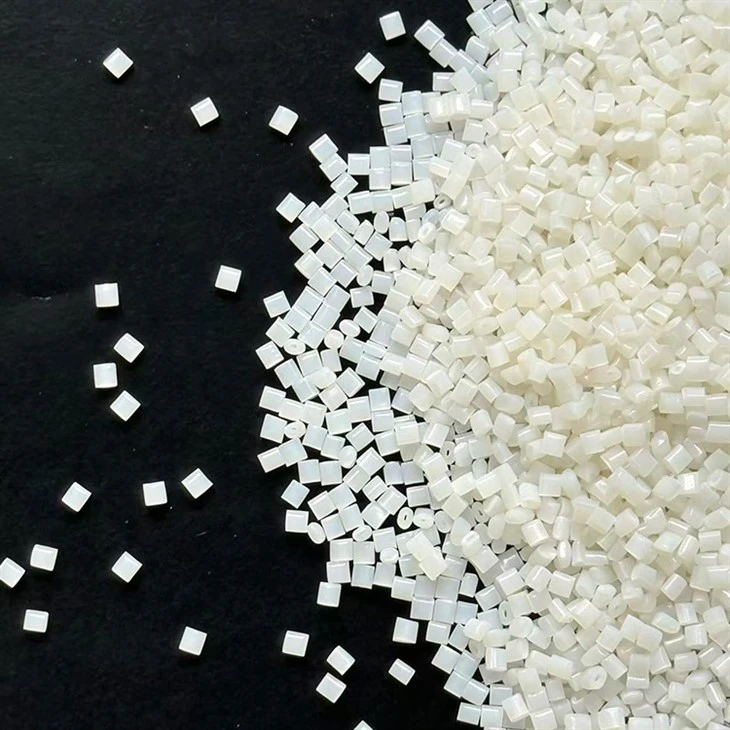
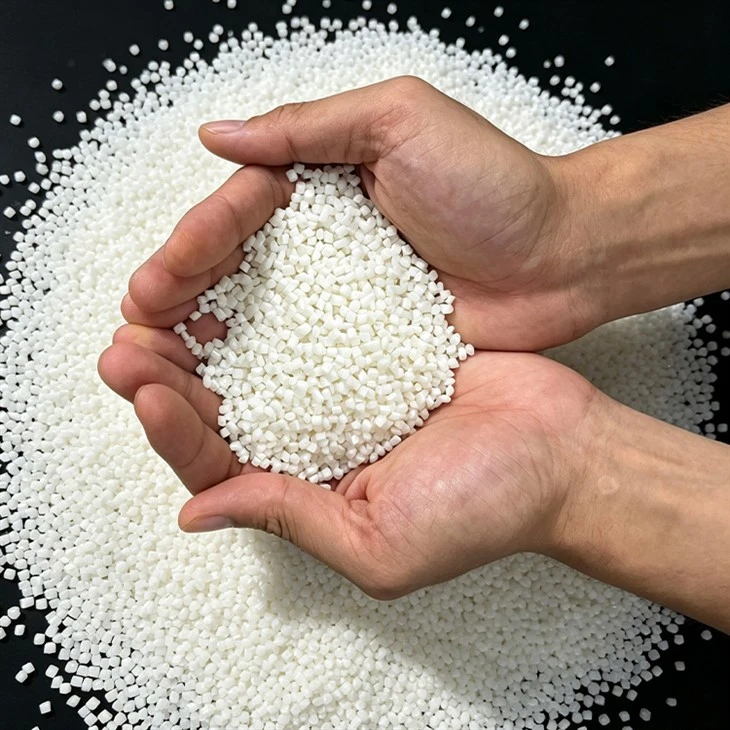
First, let's break down what PC/ABS even is for anyone who's new here. It's a blend of polycarbonate (PC, the tough, shatter-resistant stuff) and acrylonitrile butadiene styrene (ABS, the hard, moldable base that's super affordable). Mix them together and you get a resin that balances impact strength, heat resistance, and processability way better than either alone. The catch? Regular PC/ABS, that's just your average, off-the-shelf stuff we also carry as general grade PC/ABS resin, will turn into junk fast in direct sunlight. The butadiene in ABS gets broken down by UV rays-think of it like how your old car dashboard gets chalky and faded after 5 years outside-leading to cracks, color loss, and total structural failure if it's in a high-stress part.
That's where UV resistant PC/ABS comes in, right? But wait-"UV resistant" isn't a one-size-fits-all label. I see so many companies slap that term on any resin that's slightly more fade-resistant, so let's get scientific here. The real work in UV-resistant PC/ABS is twofold: UV stabilizers and sometimes pigments. The stabilizers fall into two main types: UV absorbers (UVA) that soak up harmful UV-B and UV-A rays before they can break down the polymer chains, and hindered amine light stabilizers (HALS) that neutralize the free radicals that form when UV rays damage the plastic. Some blends also add carbon black or other light-stable pigments that act as a physical barrier, blocking UV from penetrating deep into the material.
Now, let's talk real outdoor performance, because lab results only matter if they match what happens in the real world. We test all our UV resistant PC/ABS resin in our own weathering chamber-we simulate 5 years of Florida sunlight (that's some of the harshest on Earth, by the way, high humidity and intense UV) to see how it holds up. What we see is that properly formulated UV-stabilized PC/ABS will retain over 80% of its impact strength after 3,000 hours of accelerated weathering. Compare that to general grade PC/ABS resin, which typically loses more than 50% of its impact strength in the same time frame, and you start to see the gap.
But here's the thing: not all outdoor uses are the same. A patio side table that's shaded most of the day is way easier on resin than a playground slide that's in direct sun 10 hours a day, or a bus stop sign bracket that's exposed to both UV and road salt in the winter. That's where matching the resin to the application becomes make-or-break. For moderate outdoor use-like garden tools, outdoor storage bins, or decorative outdoor fixtures-standard UV resistant PC/ABS is perfect. For harsher conditions, like marine components, playground equipment, or automotive exterior trim that's exposed to constant sun and temperature swings, you might want to look at anti-uv PC/ABS resin that's formulated with extra HALS and higher loadings of light stabilizers.
I get a lot of questions about whether glass fiber reinforced PC/ABS resin works outdoors, too. A lot of manufacturers reach for glass fiber to boost strength, but glass fiber can actually make UV damage worse if the blend isn't stabilized. A lot of manufacturers reach for glass fiber to boost strength, but if the blend isn't properly stabilized, glass-filled PC/ABS is actually more vulnerable to UV damage. The polymer–fiber interface is a preferred site for photo-oxidation and crack initiation, and once the surface resin erodes, exposed glass fibers can wick moisture and accelerate interfacial degradation, which over time can cause the glass to separate from the polymer matrix. We've tested glass fiber reinforced UV PC/ABS, though, and when we properly encapsulate the glass fibers with stabilizer-rich resin, it holds up almost as well as unfilled UV resistant PC/ABS resin. That's why we only recommend glass fiber reinforced for outdoor use if the blend is specifically formulated for it-no cutting corners on the stabilizers here.
Another common misconception: once resin is "UV resistant," you never have to worry about it, right? Nope. Even the best UV resistant PC/ABS will degrade over decades, not forever. We've had customers come to us with parts that are 15 years old from a supplier that claimed their resin was "permanently UV resistant" and those parts had severe cracking. The stabilizers do break down over time, they just do it way slower than in regular resin. The good news is that for most outdoor product lifespans-5 to 10 years, which is the average for patio furniture, consumer electronics housings, or outdoor signage-our UV resistant PC/ABS is more than enough. It will retain its color, strength, and shape through rain, snow, 100°F summer days, and even occasional hailstones that would chip regular plastic.
Let's talk about real-world examples to back this up. Last year, we worked with a company that makes outdoor smart meter enclosures. They were using a different resin before, and within 2 years, 12% of their units were failing-cracking on the top where the sun hits the most, which meant water was getting in and ruining the electronics. They switched to our UV resistant PC/ABS resin, and after 18 months of field testing, they've had ZERO failures. Another client makes playground equipment for public parks, where parts have to stand up to constant sun, rough play, and harsh cleaning chemicals. They tried general grade PC/ABS resin at first to save money, but it faded so bad that the park started getting complaints. They swapped to our UV resistant blend, and now their equipment is holding color and strength 3 years later with no issues.
Wait, what about flame retardant PC/ABS resin? Do those work for outdoor use too? A lot of manufacturers need parts that are both fire-resistant and outdoor-rated-like electrical enclosures for outdoor power tools or lighting fixtures. The short answer is yes, if the flame retardant blend is formulated with UV stabilizers. Some older flame retardant formulas used additives that are not UV-stable, leading to faster degradation. But our flame retardant PC/ABS resin has UV stabilizers built right in, so it retains both its flame resistance and outdoor performance. That's a huge win for manufacturers who don't want to use two different resins for different parts of their product.
Now, let's get into the fine print of how to make sure you're actually using UV resistant PC/ABS for outdoor use correctly. First, check the weathering specs. If a supplier can't tell you exactly how many hours of accelerated weathering their resin is rated for, that's a red flag. We list our UV resistant PC/ABS resin as 3,000+ hours of UV exposure before it loses critical performance properties-independent third-party tests back that up, too. Second, consider the application's specific stresses. If your part will be under constant tension or impact, go for a higher impact grade of UV stabilized PC/ABS, not a general one. Third, avoid overloading with pigments. A lot of companies add extra black pigment to cut UV, but too much pigment can actually make the resin more brittle, so you need to balance color and stabilizer levels.
I also get asked all the time if there's a downside to using UV resistant PC/ABS instead of regular. Yeah, it's a little more expensive upfront-usually 10-15% more than general grade PC/ABS resin. But when you compare that to the cost of recalls, warranty claims, or replacing parts that fail early, it's a no-brainer. We've had customers tell us that switching to our UV resin saved them over $100k in one year from reduced returns. Plus, it processes just like regular PC/ABS-no need for new molds or equipment, so you don't have to invest in new machinery to make the switch.
Let's wrap this up with a quick answer to the original question: Is UV resistant PC/ABS suitable for outdoor use? Absolutely-if it's properly formulated with the right UV stabilizers and matched to your specific application's conditions. It's way more durable and long-lasting than regular PC/ABS, it balances strength, processability, and weather resistance, and it works for a huge range of outdoor products from patio furniture to electrical parts.
If you're currently dealing with plastic parts failing outdoors, or if you're designing a new product and want to make sure it holds up to the elements, we're here to help. We can walk you through our different grades, including our UV resistant PC/ABS resin, anti-uv PC/ABS resin, glass fiber reinforced PC/ABS resin, general grade PC/ABS resin, and flame retardant PC/ABS resin, to find the exact blend that fits your needs and budget. Drop us a line, share what you're working on, and we'll help you make sure your outdoor parts last as long as they're supposed to.
References:
- Plastic Weathering and Degradation: A Practical Guide, Society of Plastics Engineers, 2021
- "Performance of PC/ABS Blends in Outdoor Applications", Journal of Applied Polymer Science, Vol. 118, No. 3, 2010
- UV Stabilization of Thermoplastics, European Plastics Converters Association, 2022
- Field Durability of Exterior Polymer Components, American Society for Testing and Materials (ASTM) International, 2019