

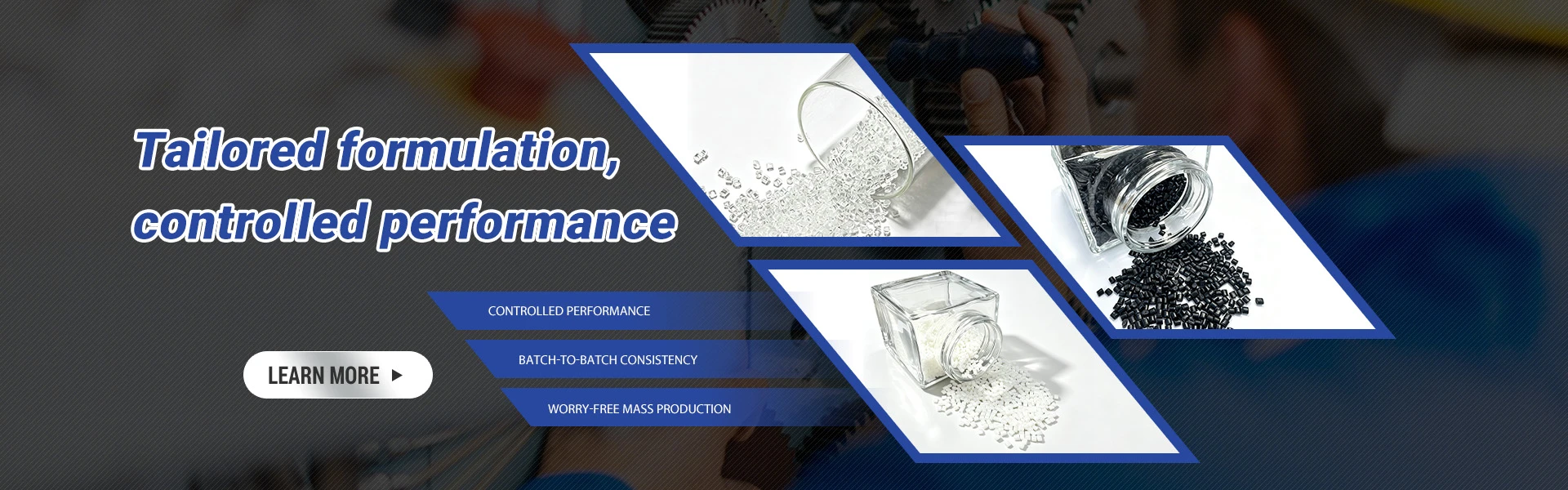
Polycarbonate granules possess a variety of unique physical properties.
In terms of appearance, polycarbonate granules are typically colorless or pale yellow and transparent, offering excellent visual appeal in many applications. The granules are generally uniform in shape-mostly spherical or near-spherical-with smooth surfaces; this facilitates flow and molding during processing by minimizing friction and resistance.
Regarding density, polycarbonate granules are relatively lightweight, with a density of approximately 1.20–1.25 g/cm³. This makes them lighter than many other plastic materials of the same volume, thereby simplifying transport and handling.
They have a high melting point, typically ranging from 220°C to 230°C. While this necessitates higher processing temperatures, it also imparts excellent heat resistance, allowing the material to maintain stable physical properties within a specific temperature range without easily deforming or melting.
Polycarbonate granules exhibit impressive mechanical strength, with a tensile strength of 60–70 MPa and a flexural strength of approximately 90–130 MPa. This enables them to retain their shape and structural integrity under external loads, making them suitable for manufacturing components that require high strength.
Furthermore, polycarbonate granules offer superior electrical insulation properties-characterized by high dielectric strength and low dielectric constant and dissipation factor-leading to widespread use in the electronics and electrical appliance industries.
In summary, these physical properties enable polycarbonate granules to play a vital role across numerous sectors, including automotive manufacturing, electronics and electrical appliances, and construction materials.