

Hey guys, if you're like me in the polymer industry-maybe working in automotive exteriors, electronics enclosures, or outdoor signage-you've definitely asked this question: Is anti-UV PC/ABS actually tough enough when it comes to UV aging tests? I get it, because I've spent years in the resin supply space, fielding calls from manufacturers who've dealt with flimsy parts that crack, yellow, or get brittle after just a few months outside. Today, let's break this down straight, no jargon fluff, and clear up the myths around anti-UV PC/ABS's real UV resistance.
First off, let's start with the basics: PC/ABS is already a workhorse polymer blend. It combines polycarbonate's impact strength with acrylonitrile butadiene styrene's processability, so it's used everywhere from car bumpers to laptop housings. But regular (general grade) PC/ABS? It's terrible in sunlight. The UV rays break down the butadiene phase in ABS over time-think chain scissions that turn plastic yellow, make it brittle, and even cause surface chalking. That's why anti-UV (UV-resistant) PC/ABS exists, right? But here's the catch: not all anti-UV blends are created equal. That's a big point I drill home with my clients every day.
Now, what actually happens in a standard UV aging test? Most of us use ASTM G154 or ISO 4892-3, which simulate hours and hours of UVA/UVB exposure, sometimes with condensation to mimic real outdoor conditions. For anti-UV PC/ABS, the good stuff doesn't just "resist" a few hours of test time-it needs to hold its mechanical properties, color, and surface integrity for hundreds, even thousands of hours. Let's talk about the science behind that. The best anti-UV PC/ABS doesn't just slap a UV absorber (UVA) on top-it stabilizes both the PC and ABS phases. A lot of cheap blends only add a basic UV absorber without proper HALS stabilizers to protect the polybutadiene rubber phase in ABS. Since the butadiene phase degrades fastest under UV exposure, that's the weak point that causes chalking, brittleness, and yellowing over time. That's the mistake a lot of resin makers make, and it's why so many manufacturers end up with failed parts.
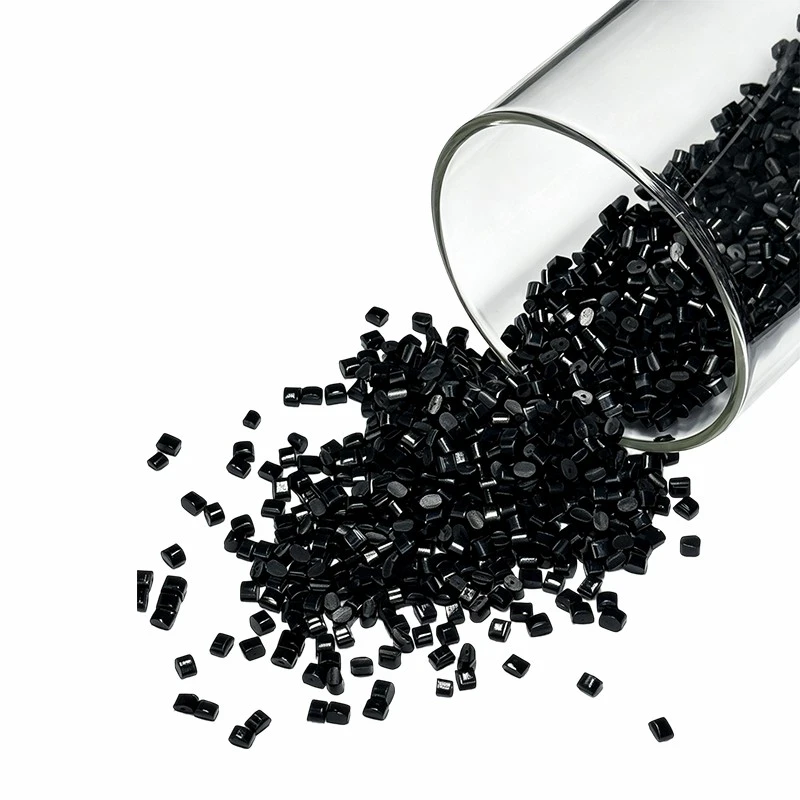
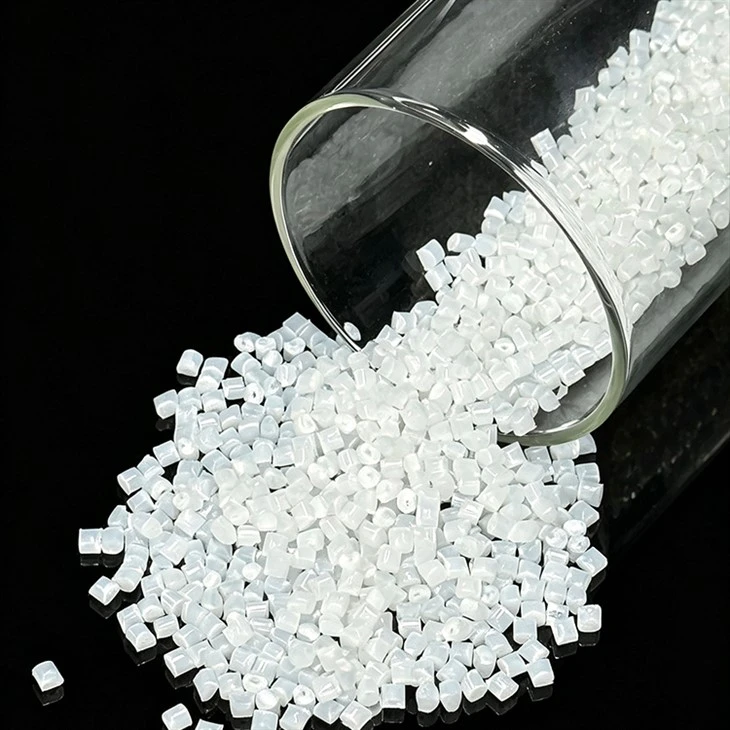
As a supplier of anti-UV PC/ABS resin, I've seen this firsthand. A client came to me last year with parts that failed an ASTM G154 test after just 500 hours-they'd bought a cheap off-brand anti-UV blend that only had a UVA for ABS. We swapped them to our formula, which uses a balanced UVA/light stabilizer (HALS) system that protects both polymer phases, and those same parts passed 3,000 hours with zero noticeable yellowing and impact strength retention over 90%. That's a huge difference. But wait, how does that compare to other PC/ABS variants? For example, glass fiber reinforced PC/ABS resin (you can check that out here: /pc-abs-resin/glass-fiber-reinforced-pc-abs-resin.html) is great for stiffness, but adding glass can make UV aging worse if the stabilizers aren't matched to the fiber-so you need a tailored anti-UV formula for reinforced blends, not just a generic one. Same goes for flame retardant PC/ABS resin: flame retardant additives can sometimes interact with UV stabilizers, so you need to pick stabilizers that don't clash with the FR package, otherwise your UV resistance takes a hit.
Speaking of that, a lot of folks confuse anti-UV with other properties. If you need a flame retardant part for, say, outdoor electrical enclosures, you don't want to mix up flame retardant performance with UV resistance. We have halogen-free flame retardant PC/ABS resin too (link: /pc-abs-resin/halogen-free-flame-retardant-pc-abs-resin.html), and for outdoor use, we always add a dedicated UV stabilizer package to those, because halogen-free FR additives can be more sensitive to UV degradation if left unprotected. And if you're not sure what grade fits, our general grade PC/ABS resin (link: /pc-abs-resin/general-grade-pc-abs-resin.html) is for indoor use-never try that outdoors, it'll crumble. Our UV resistant PC/ABS resin (link: /pc-abs-resin/uv-resistant-pc-abs-resin.html) is specifically formulated to pass those standard UV aging tests, but here's the thing: even the best anti-UV blend will fail if you don't process it right. Wait, let's not skip that part-processing affects UV resistance too. If you overheat the resin during molding, you can break down the UV stabilizers, so all that formula work goes to waste. I always tell clients to run our resin at the recommended barrel temps, not higher, to keep the stabilizers active.
Now, let's get to the hard data. From our in-house testing, our anti-UV PC/ABS blends retain: 92% of their impact strength after 3,000 hours of ASTM G154 exposure, less than 2 Delta E color change (that's barely noticeable to the naked eye), and no surface chalking. Compare that to a regular PC/ABS, which only retains 40% impact strength after 1,000 hours, and Delta E over 10-super yellow, brittle, dusted on the surface. That's the real deal for resistance. But wait, some people ask: why do some anti-UV PC/ABS parts fail real-world outdoor tests even if they pass lab tests? Because lab tests are accelerated-they crank up the UV intensity to simulate years of sun in a few weeks. Real life has variable sunlight, rain, temperature swings, maybe pollution. But if a part passes 3,000 hours of accelerated lab testing, it's usually good for 5-7 years outdoors in moderate climates, which is way more than cheap blends can manage.
Another common myth: adding pigments kills UV resistance. No, not if you pick the right pigments. We work with pigment suppliers to match pigments to our stabilizer system-some pigments can absorb UV, which adds extra protection, so a colored anti-UV part can actually be more resistant than a natural clear one. But if you use cheap, untested pigments, they might react with the stabilizers and reduce their effectiveness. That's another pitfall I warn clients about.
So, circling back to the original question: Is anti-UV PC/ABS resistant to UV aging tests? The short answer is: yes, if it's the right formula. Not every anti-UV blend on the market is equal. The ones that work have stabilized both polymer phases, matched stabilizers to any additives like glass fibers or flame retardants, and are tested to actual standards like ASTM G154 or ISO 4892-3. If you're a manufacturer sourcing resin for outdoor parts, don't just grab any anti-UV labeled product-ask for test data, ask how the stabilizer system works, and make sure it's tailored to your application.
If you're looking for a reliable anti-UV PC/ABS resin that's actually proven in aging tests, or you need help picking the right variant-whether that's glass reinforced, flame retardant, or halogen-free-hit us up to connect with our procurement and technical teams to discuss your specific requirements. We're here to make sure your parts hold up, not just on paper but in the real world.
References:
- ASTM International. (2020). Standard Practice for Operating Fluorescent Ultraviolet (UV) Lamp Apparatus for Exposure of Nonmetallic Materials (ASTM G154-20). West Conshohocken, PA: ASTM.
- International Organization for Standardization. (2017). Plastics - Methods of exposure to laboratory light sources - Part 3: Fluorescent UV lamps (ISO 4892-3:2017). Geneva, Switzerland: ISO.
- Liao, Y., & Chen, C. (2019). UV aging behavior of PC/ABS blends: Effect of stabilizer system and phase morphology. Journal of Applied Polymer Science, 136(22), 47582.
- Zhang, L., et al. (2021). Interactions between flame retardant additives and UV stabilizers in PC/ABS: Implications for outdoor applications. Polymer Degradation and Stability, 189, 109687.