

Hey everyone, if you're in the market for Flame Retardant PC/ABS Resin, chances are you've come across one super important term that gets brought up all the time: melt flow index (MFI). I get it-when you're sourcing resin for injection molding, extrusion, or any kind of manufacturing, there's a ton of jargon to sort through, and MFI is one you can't afford to sleep on. As a supplier of this exact material, I get questions about MFI weekly, so let's break it down like we're hanging out in our warehouse after a long day, not reading a textbook.
First off, let's make sure we're on the same page about what Flame Retardant PC/ABS Resin even is, for anyone new here. It's that perfect blend of polycarbonate (PC) and acrylonitrile butadiene styrene (ABS) we all know and love, with a flame retardant (FR) additive tossed in to meet strict fire safety standards-think UL94 V-0, which is a big one for electronics, automotive parts, and construction. If you want to check out the full specs of our grade, head over to our official page: Flame Retardant PC/ABS Resin. But back to MFI, because that's the star here today.
So what is melt flow index, exactly? In plain English, it's a measure of how easily a thermoplastic resin melts and flows when you push it through a tiny standardized hole (called a die) at a set temperature and pressure. The unit is grams per 10 minutes (g/10min)-so if a resin has an MFI of 15, that means 15 grams of it will flow out of the die in 10 minutes. Higher MFI means the resin is more fluid when melted; lower MFI means it's thicker, more viscous, like cold honey vs warm maple syrup.
Now, why does this matter for Flame Retardant PC/ABS specifically? Because MFI directly impacts how your parts turn out. If you're making small, intricate pieces-like the connector housing for a phone charger, or a tiny clip for a medical device-you need a higher MFI resin. It can squeeze into all those narrow, detailed mold cavities without leaving air bubbles or incomplete edges. But if you're working on larger, thicker parts, like a car dashboard component or a big appliance housing, a lower MFI might be better. It doesn't run too fast before the mold fills up, so you get better structural stability and less warping.
Wait, but hold on-flame retardants change things, right? I get that question all the time. Regular PC/ABS has its own MFI, but when you add FR additives, that can shift the MFI number. Some FRs are flow modifiers, which might bump MFI up a little, while others are more rigid and can make it drop a touch. That's why generic MFI numbers don't cut it for FR grades-you need to match the MFI to your exact application, not just a random spec sheet.
Let's talk about typical MFI ranges for Flame Retardant PC/ABS Resin, since that's what most people actually want to know. From what I've tested and what our customers use day-to-day, most of our FR PC/ABS grades fall between 8 and 25 g/10min. Wait, but that's a wide range, right? Let's break it down by use case, because that's how people shop. If you're doing thin-wall injection molding-like thin electrical enclosures or small household items-you'll want the higher end, 18 to 25 g/10min. That extra flow lets you fill those thin walls fast without flash (that annoying extra thin plastic edge you have to trim off). For general injection molding, like mid-sized automotive trim parts or power tool housings, 10 to 18 g/10min is sweet spot. It's fluid enough for detail but thick enough to hold shape. And if you're doing something more heavy-duty, maybe extrusion coating or thick parts, you might go lower-around 8 to 12 g/10min. Less flow means better melt strength, so the part doesn't sag or deform as it cools.
But wait, MFI isn't one-size-fits-all-even for Flame Retardant PC/ABS. It depends on two big things: test conditions and resin formulation. The standard test for thermoplastics is ASTM D1238, right? For PC/ABS, that's usually 260°C temperature and 5 kg weight on the piston (some grades are also reported at 260°C/2.16 kg). If someone tests at a different temp or weight, the MFI number will be totally different-so always check the test conditions before comparing numbers. Our tech team always lists those clearly on our product pages, so no guesswork there.
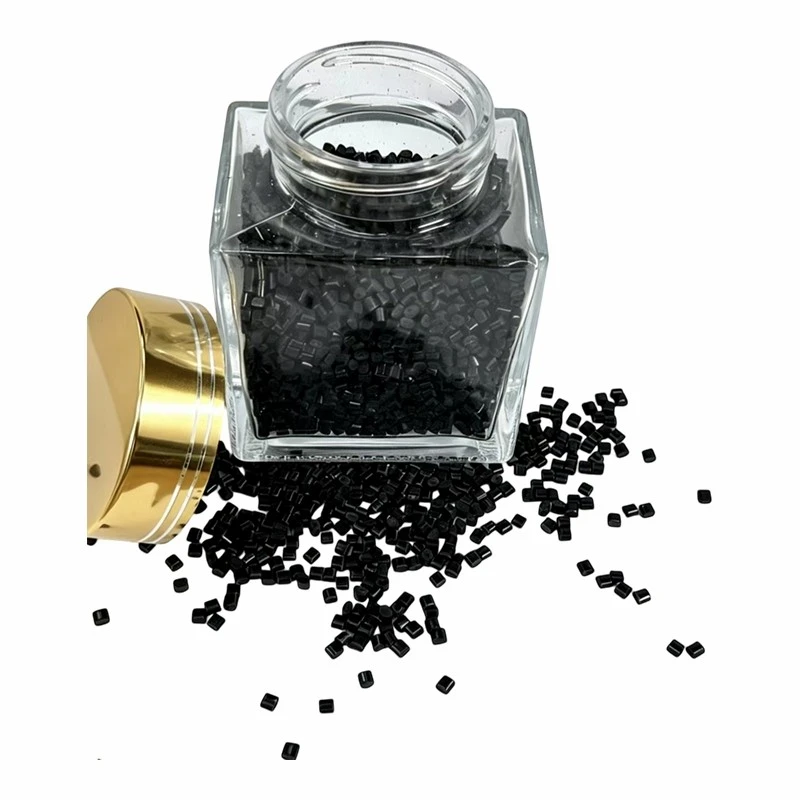
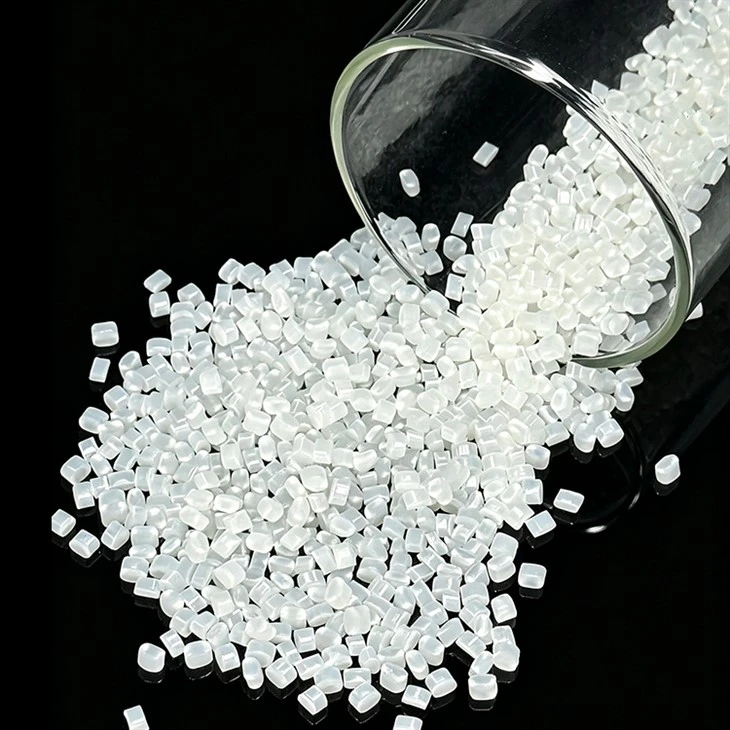
Then there's the formulation side. Our Flame Retardant PC/ABS Resin is different from, say, our Anti-UV PC/ABS Resin or General Grade PC/ABS Resin. Anti-UV grades have additives that help them hold up to sunlight, and those can tweak MFI a bit too-we've seen Anti-UV grades hover around 12 to 20 g/10min, since they're often used for outdoor parts like patio furniture or outdoor electrical boxes, which need both flow and UV resistance. General Grade, no FR or UV additives, might be a bit higher or lower depending on if it's impact-modified, but that's a whole other topic. If you need UV-resistant resin for outdoor use, check out our Anti-UV option here: Anti-UV PC/ABS Resin, and general grades are here too: General Grade PC/ABS Resin. We also do Glass Fiber Reinforced PC/ABS Resin for super strong parts-their MFI is lower, around 5 to 10 g/10min, because the glass fibers thicken the melt, which makes sense for structural parts like car door handles that take a lot of stress. That link is here if you need that: Glass Fiber Reinforced PC/ABS Resin.
Now, common mistakes I see customers make with MFI and FR PC/ABS. First, they pick an MFI number because it works for a different resin, not their specific FR grade. I once had a customer come to us with a bad batch because they used a general PC/ABS MFI spec for our FR grade, and the flow was way off-their mold had gaps everywhere. Second, they ignore melt temperature when processing. MFI is tested at a specific temp, but if your actual molding machine runs 10°C higher, the resin will flow more than the test number, so you might get flash. If it's 10°C lower, you get incomplete fills. Third, they don't account for the FR type. Brominated and phosphorus-based FRs affect melt flow differently, and the direction depends on the specific FR chemistry-phosphorus-based plasticizing FRs often improve melt flow, so always verify the MFI on the actual FR grade rather than assuming a fixed direction. That's why our tech team pre-adjusts each FR grade's MFI to match common processing needs, so you don't have to tweak it on your end as much.
Another thing: MFI and impact strength tradeoff. Wait, that's a big one. In PC/ABS, higher MFI usually means lower molecular weight, right? And lower molecular weight often means less impact resistance. But with Flame Retardant grades, manufacturers balance this-we adjust the FR additives and polymer blend to keep MFI high enough for molding but impact strength up to par, so you don't have to choose between easy flow and a part that doesn't break when dropped. That's one of the reasons our FR PC/ABS is popular-we don't cut corners on that balance.
Let's get practical. If you're a molder looking for the right MFI for your Flame Retardant PC/ABS project, here's a quick cheat sheet I've shared with customers over the years:
- Thin-wall injection molding (≤ 1mm wall thickness): 18–25 g/10min
- Standard injection molding (1–3mm walls): 10–18 g/10min
- Thick parts/extrusion (>3mm walls): 5–10 g/10min
- Outdoor applications (if combining FR and UV resistance): 12–20 g/10min (that's our UV-resistant FR grade, by the way, linked here: UV Resistant PC/ABS Resin)
Wait, but why would you need both FR and UV resistance? If your part is in a place that's both inside electronics (needs flame retardance) and maybe near a window or outside, like an outdoor power adapter, then that combo is perfect. Our UV-resistant FR grade hits that sweet MFI for those parts, so you don't have to source two separate materials.
Now, let's talk about how MFI affects processing costs, because that's a real concern for manufacturers. Higher MFI resin flows faster, so molding cycles are shorter-more parts per hour, lower labor and energy costs. But lower MFI might need higher processing temps or pressures, which can raise energy use and wear on your machines. So it's not just about part quality; it's about your bottom line. We help customers pick an MFI that balances part specs, quality, and cost, so they don't overspend or have to rework parts.
I've had a lot of new customers reach out nervous about picking the right MFI. They think it's some super complicated number, but once you tie it to your actual application, it's straightforward. For example, a customer last year was making smoke detectors-those need super thin walls, UL94 V-0 flame resistance, and they're small, detailed. They initially went with a lower MFI grade, but they were getting half the parts passing inspection because the mold wasn't filling the small holes for the sensors. We switched them to our 20 g/10min FR grade, and their defect rate dropped to under 2%, and their cycle time went down by 10%. That's the kind of win we love to see.
Another example: an automotive parts manufacturer making interior door panels. They needed thick parts, high impact, UL94 V-0, and they had some issues with warping when using a high MFI resin. We swapped them to our 12 g/10min FR grade, and the warping problem went away, and their impact strength met their new safety specs. That's why knowing your part's requirements is key to picking the right MFI for Flame Retardant PC/ABS Resin.
Wait, should I mention something about testing MFI for your specific batch? Yeah, absolutely. Sometimes, even with the right spec, batches can have slight MFI variations, but that's normal for thermoplastics. If you get a batch and the MFI is a little off, don't panic-just adjust your molding machine's temp or pressure a bit. Our tech team is always available to help with that, no extra hoops to jump through.
Now, let's wrap this up with the most important part: if you're working on a project that uses Flame Retardant PC/ABS Resin, don't guess on MFI. Too many people waste time and money using the wrong number, leading to bad parts, rework, and missed deadlines. We've got a range of FR grades with different MFI levels, plus we can help you pick the right one based on your part's size, thickness, application, and processing equipment. Whether you need thin-wall electronics parts, thick automotive components, outdoor UV-resistant parts, or glass-fiber reinforced structural parts, we've got you covered with our full line of PC/ABS resins, all with clear MFI specs and support to make your project a success.
Ready to stop guessing and get the right Flame Retardant PC/ABS Resin for your MFI needs? Reach out to our team to discuss your project and get a custom quote-we're here to help every step of the way.
References:
- ASTM International. (2022). Standard Test Method for Melt Flow Rates of Thermoplastics by Extrusion Plastometer (ASTM D1238). West Conshohocken, PA: ASTM International.
- Harper, C. A. (2016). Modern Plastics Handbook (2nd ed.). New York: McGraw-Hill Education.
- Underwriters Laboratories. (2021). Standard for Safety of Plastics - flammability test for parts and components (UL 94). Northbrook, IL: Underwriters Laboratories Inc.
- Rosato, D. V., & Rosato, M. G. (2018). Injection Molding Handbook (5th ed.). Munich: Hanser Publishers.
- Plastic Technologies Industry Association. (2020). Thermoplastic Resin Specification Guide: PC/ABS Blends. Washington, DC: Plastics Industry Association.